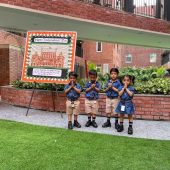
 HRM Global School
5 hours ago in Education & Training
HRM Global School
5 hours ago in Education & Training
High Authority Social Bookmarking Site for Indian SEO in 2026 - A2Bookmarks India
A2Bookmarks India stands as the nation's premier social bookmarking site, expertly crafted for Indian users and businesses to enhance their digital visibility. Our social bookmarking site for India allows you to seamlessly save, organize, and promote essential web content while engaging with India's rapidly expanding online community. As one of the most effective Indian social bookmarking sites for 2026, our advanced SEO-optimized features help significantly boost website traffic and strengthen search engine presence across diverse markets. Join our thriving network among India's top social bookmarking sites to discover curated content, connect with industry professionals, and accelerate your digital growth. Start maximizing your online impact today with our tailored platform among the best social bookmarking sites for the Indian market designed specifically for the Indian digital landscape.
Why Should Parents Verify Board Affiliation Before Selecting a Top School in Pitampura? hrmglobalschools.blogspot.com
HRM Global School
5 hours ago in Education & Training

How are daycare and preschool different in practice?
Think about an ordinary weekday.
- Hours: Preschool usually runs for a few hours in the morning. Daycare covers longer stretches, sometimes the full office day.
- Age range: Daycares may take babies and young toddlers. Preschools typically group children by age, starting around two or three.
- Focus: Daycare prioritises safety, meals, naps and routine. Preschool adds structured activities aimed at school readiness.
- Staff: In a preschool, look for teachers trained in early childhood education. In a daycare, caregivers’ experience with toddlers, hygiene and first aid matters just as much.
Neither option is better by default. Two working parents commuting to Netaji Subhash Place may need daycare hours. A parent at home may only want a few hours of preschool so the child gets used to other children and a teacher.
Where does nursery in a formal school fit?
This is where Delhi parents often mix things up. Play school is usually the stage before formal nursery. Nursery admission in a private school follows the Delhi Directorate of Education’s annual schedule and criteria, while standalone play schools generally admit children through the year.
Under NEP 2020, ages three to eight form the foundational stage of education. The early years are now treated as part of schooling, not a waiting room before it. That’s a good reason to look closely at what a play school teaches, not just how cheerful it looks.
What should you check before choosing?
Visit during working hours, not only on an open day. Then ask:
- What is the adult-to-child ratio in my child’s group?
- Who handles toilet training, meals and naps, and how are parents updated?
- Are CCTV, staff background checks and pickup authorisation in place?
- If my child stays beyond preschool hours, who looks after them, and where?
- How do new children settle in during the first few weeks?
The last answer tells you a lot. A centre that pushes a full day from week one isn’t thinking about how a two-year-old adjusts.
Common mistakes parents make
Choosing on decor is the most common one. Bright walls and imported toys say very little about how staff respond to a crying three-year-old. Another is picking a centre far from home because it sits near a well-known school. A long ride twice a day through Pitampura’s market traffic is tiring at this age. Parents also forget to ask about holidays and closing times, which matters if you were counting on daycare cover.
voters
Report Story Related Stories









Recent Stories