 jhon carter
50 minutes ago in Business Services
jhon carter
50 minutes ago in Business Services
High Authority Social Bookmarking Site for Indian SEO in 2026 - A2Bookmarks India
A2Bookmarks India stands as the nation's premier social bookmarking site, expertly crafted for Indian users and businesses to enhance their digital visibility. Our social bookmarking site for India allows you to seamlessly save, organize, and promote essential web content while engaging with India's rapidly expanding online community. As one of the most effective Indian social bookmarking sites for 2026, our advanced SEO-optimized features help significantly boost website traffic and strengthen search engine presence across diverse markets. Join our thriving network among India's top social bookmarking sites to discover curated content, connect with industry professionals, and accelerate your digital growth. Start maximizing your online impact today with our tailored platform among the best social bookmarking sites for the Indian market designed specifically for the Indian digital landscape.
Sustainable Packaging, Advanced Polymer Performance, and the Evolving Role of Bio-Based Materials marknteladvisors.com
jhon carter
50 minutes ago in Business Services
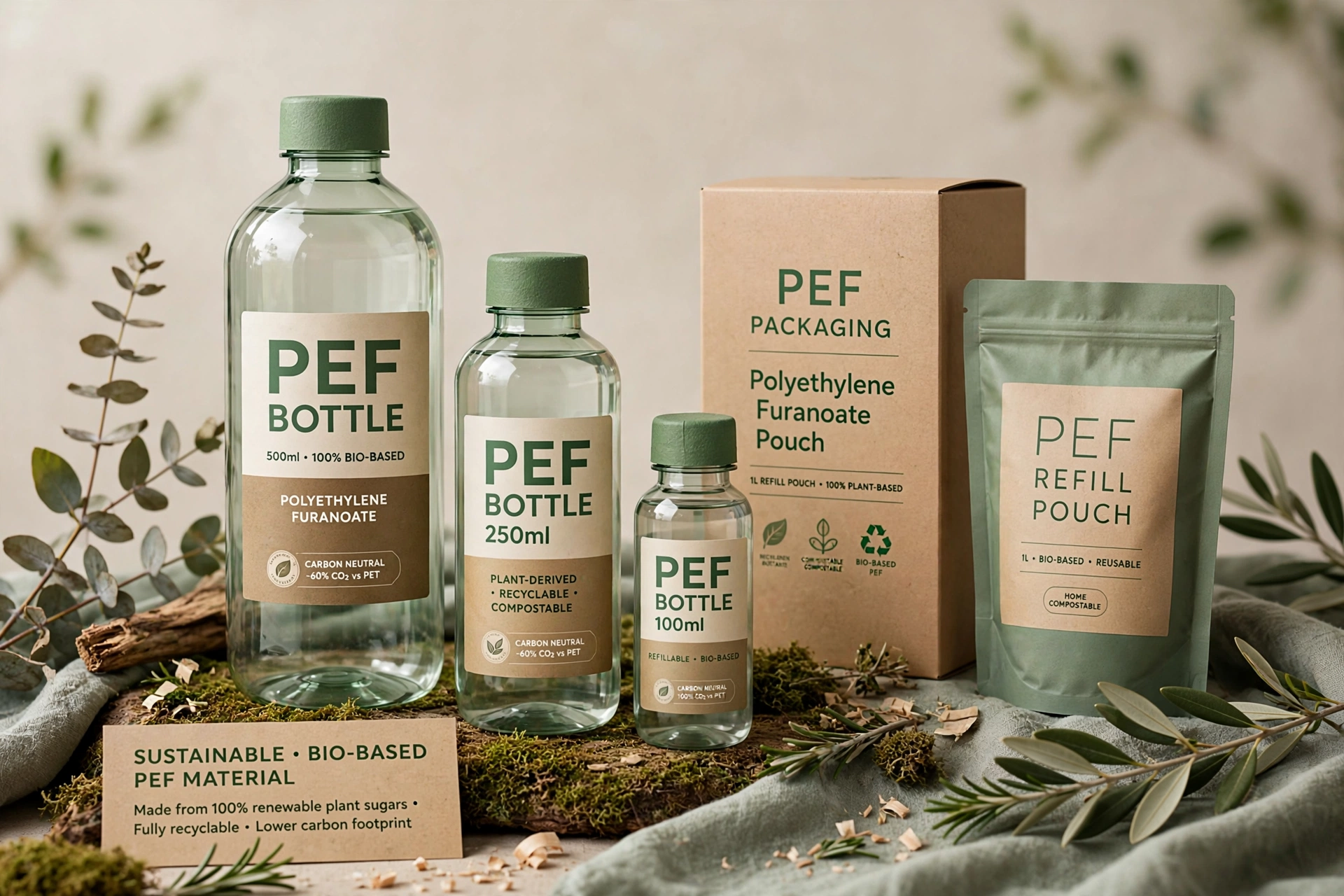
The transition toward lower-carbon materials is influencing packaging, textiles, electronics, and other industries that depend on high-performance polymers. Polyethylene furanoate (PEF) has gained attention as a bio-based polyester derived from 2,5-furandicarboxylic acid (FDCA), offering material characteristics that can support applications where barrier performance, strength, and resource efficiency are important.
A comprehensive market assessment by Markntel Advisor reveals that the Polyethylene Furanoate (PEF) Market is valued at USD 41.8 million in 2026 and is projected to reach USD 77.8 million by 2032, registering a CAGR of 10.91% during 2026–2032. The study uses 2025 as the base year and identifies Bottles and Containers as the leading segment by application, while Europe represents the largest region. The PEF industry growth analysis examines applications, end-use industries, and other developments shaping the sector.
Bottles and Containers Represent a Major Application
Bottles and containers represent an important application area because packaging materials must balance mechanical strength, barrier properties, weight, processing requirements, and end-of-life considerations. European research on PEF has highlighted its potential for bottles and other packaging formats, particularly where improved protection against gases can support product preservation. The European Commission’s PEF research findings also describe applications spanning containers, films, cosmetic packaging, and related products.
Bio-Based Feedstocks Support Material Development
PEF differs from conventional PET through its furan-based chemical structure and the use of FDCA as a key building block. FDCA can be produced from renewable carbon sources, creating opportunities to incorporate agricultural or bio-based feedstocks into polymer production. The European Commission notes that bio-based plastics research forms part of wider efforts to develop circular bioeconomy solutions, although environmental performance depends on feedstock sourcing, production processes, and end-of-life management.
Films, Fibers, and Other Applications Expand the Scope
Beyond bottles and containers, PEF can be considered for films, fibers, sheets, molded components, and other specialized applications. These uses require different combinations of flexibility, durability, thermal behavior, barrier performance, and processing compatibility. As polymer formulations develop, application-specific characteristics can influence adoption across packaging, textile, electrical, electronics, and other industrial value chains.
The European Union-funded PEFerence project demonstrated PEF prototypes across several product categories and examined its potential integration into existing processing and recycling systems. Such development activity illustrates how commercialization involves not only polymer production but also conversion technologies, product design, recycling compatibility, and supply-chain coordination.
Europe Represents a Major Regional Center
Europe is identified as the largest region in the study, reflecting the region’s broader activity around bio-based materials, circular economy policies, and sustainable packaging development. European policy discussions increasingly consider the role of renewable feedstocks alongside recycled materials. A 2026 European Commission publication examining bio-based feedstocks in plastic packaging also highlights the importance of sustainability criteria, recycling infrastructure, and environmental performance when evaluating alternatives to fossil-based plastics.
Recycling and Life-Cycle Considerations Remain Important
The development of PEF involves more than replacing one polymer with another. Collection systems, recycling compatibility, product design, feedstock sourcing, and life-cycle assessment can influence its overall environmental profile. The PEFerence project reported work on recycling assessment, food-contact considerations, and life-cycle analysis, demonstrating the need to evaluate the complete material chain rather than production alone.
Outlook
The development of PEF reflects the broader movement toward bio-based and advanced polymer materials capable of serving demanding applications. Bottles and containers remain a central application area, while films, fibers, and specialty components provide additional avenues for material development. Continued progress in feedstock availability, polymer processing, recycling systems, regulatory frameworks, and life-cycle assessment will influence how PEF integrates into evolving packaging and industrial material systems.
voters
Report Story 
Related Stories










Recent Stories