 Naksh Stone India
4 hours ago in Manufacturing & Industrial
Naksh Stone India
4 hours ago in Manufacturing & Industrial
High Authority Social Bookmarking Site for Indian SEO in 2026 - A2Bookmarks India
A2Bookmarks India stands as the nation's premier social bookmarking site, expertly crafted for Indian users and businesses to enhance their digital visibility. Our social bookmarking site for India allows you to seamlessly save, organize, and promote essential web content while engaging with India's rapidly expanding online community. As one of the most effective Indian social bookmarking sites for 2026, our advanced SEO-optimized features help significantly boost website traffic and strengthen search engine presence across diverse markets. Join our thriving network among India's top social bookmarking sites to discover curated content, connect with industry professionals, and accelerate your digital growth. Start maximizing your online impact today with our tailored platform among the best social bookmarking sites for the Indian market designed specifically for the Indian digital landscape.
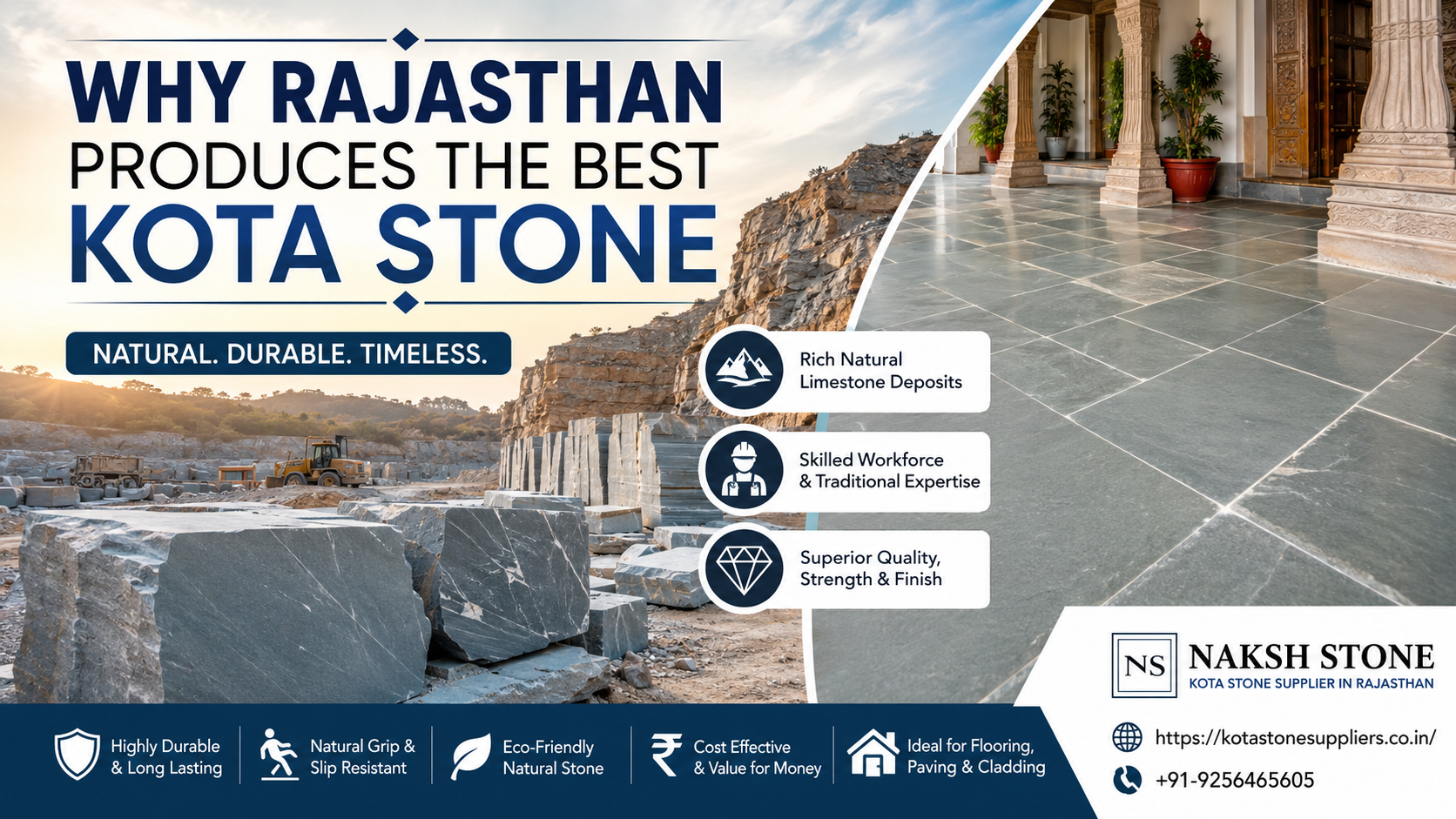
Why Rajasthan Produces the Best Kota Stone kotastonesuppliers.co.in
Naksh Stone India
4 hours ago in Manufacturing & Industrial
Kota Stone is one of India’s most popular natural stones for flooring, paving, wall cladding, pathways, commercial spaces, and outdoor applications. Known for its durability, natural beauty, practical pricing, and wide range of finishes, kota stone has become a preferred material for residential and commercial construction projects across India.
But why is Rajasthan considered the leading source of high-quality Kota Stone? The answer lies in its unique geological formations, extensive limestone deposits, established mining ecosystem, skilled workforce, processing infrastructure, and strong supply network.
The Ramganj Mandi region of Kota district is particularly important. Government and geological sources identify Kota, Jhalawar, and Chittorgarh as major producing areas for dimensional limestone, while extensive splittable limestone deposits occur around Ramganj Mandi.
For buyers looking for consistent quality and dependable supply, working with an experienced kota stone supplier in Rajasthan can make the sourcing process easier and more reliable.
What Is Kota Stone?
Kota Stone is a natural flaggy limestone traditionally associated with the Kota region of Rajasthan. It is generally fine-grained and occurs in naturally splittable layers, allowing it to be extracted and processed into slabs and tiles.
The Bureau of Indian Mines notes that Kota Stone occurs in natural thicknesses ranging from approximately 12 mm to 150 mm or more. Mined slabs can be cut into different sizes and thicknesses according to project requirements.
Its natural split surface can provide a practical non-slip finish, while the stone can also be processed into other finishes depending on the intended application.
Common uses include:
- Residential flooring
- Commercial flooring
- Outdoor paving
- Garden pathways
- Staircases
- Wall cladding
- Parking areas
- Public buildings
- Institutional projects
- Landscaping
- Exterior facades
This versatility is one of the major reasons why kota stone continues to be in demand throughout India.
1. Rajasthan Has Exceptional Geological Deposits
The biggest reason behind Rajasthan’s reputation for Kota Stone is geology.
The Kota Stone deposits are associated with limestone formations of the Vindhyan geological system. Government mineral documents specifically identify dimensional limestone, commonly known as Kota Stone, in areas including Ramganj Mandi in Kota district, along with Jhalawar and Chittorgarh.
The Indian Bureau of Mines describes extensive limestone deposits in the region and notes that certain portions occur in splittable forms suitable for flooring and building applications.
This natural geological advantage gives Rajasthan access to a large and commercially important resource of flooring-grade limestone.
The stone’s formation is particularly valuable because it can occur in layers that can be split into slabs. This characteristic makes it practical for producing flooring tiles and slabs without requiring the same type of block extraction used for some other natural stones.
2. Ramganj Mandi Is a Major Kota Stone Hub
When discussing the origin of high-quality Kota Stone, Ramganj Mandi deserves special attention.
Ramganj Mandi, located in Kota district, is surrounded by important limestone-producing areas. Government and geological records identify extensive deposits near Ramganj Mandi and describe the region as an important source of splittable limestone used as flooring stone.
The concentration of mines, processing units, transport facilities, skilled workers, and experienced traders has helped create a complete stone ecosystem around the region.
For a buyer, this concentration offers several practical advantages:
- Better access to natural stone
- More product varieties
- Multiple thickness and size options
- Easier bulk procurement
- Established processing facilities
- Experienced stone workers
- Strong transportation connections
As a result, choosing a kota stone supplier operating close to the source can be advantageous for large construction projects.
3. Natural Strength Makes Kota Stone Highly Practical
Another reason Rajasthan’s Kota Stone is widely used is its combination of strength and practicality.
According to the Indian Bureau of Mines, Kota Stone varieties can have high compressive strength, good resistance to abrasion, and resistance to delamination and failure under freezing and thawing conditions. The same source describes massive, dense and fine-grained varieties as generally durable because of their relatively low porosity.
These characteristics make kota stone suitable for areas exposed to regular foot traffic and outdoor conditions.
However, actual performance depends on the specific stone grade, thickness, installation method, surface finish, maintenance, and application. Buyers should therefore evaluate samples and technical specifications rather than assuming every piece will have identical properties.
4. Natural Splitting Makes Processing Efficient
One of the distinctive characteristics of Kota Stone is its natural split.
The limestone occurs in layers that can be separated into slabs. This makes the stone particularly suitable for flooring applications.
After extraction, the material can be:
- Selected according to quality.
- Split or cut into suitable slabs.
- Cut into required dimensions.
- Finished according to application.
- Sorted and packed.
- Transported to the project location.
The Indian Bureau of Mines states that Kota Stone is mined using open-cast manual or semi-mechanised methods and that diamond saws are used to cut tiles to required thicknesses and measurements.
This combination of traditional stone-working knowledge and modern cutting technology allows Rajasthan’s stone industry to supply products for both conventional and modern construction.
5. Wide Range of Natural Colours
Kota Stone is not limited to one appearance.
Depending on the quarry and geological characteristics, Kota Stone can be available in different natural shades and variations, including blue-grey, greenish, brown and related earthy tones.
The natural colour variation gives architects and designers flexibility when selecting stone for different environments.
For example:
Kota Blue
Kota Blue is recognized for its cool blue-grey appearance and is widely associated with traditional Kota flooring applications.
Kota Brown
Kota Brown offers warmer earthy tones and can work well with contemporary as well as traditional architectural designs.
Greenish and Other Natural Shades
Some deposits can show greenish or mixed natural tones. These variations contribute to the natural character of the material.
Because natural stone is a geological product, colour and texture can vary between batches. A professional kota stone supplier in Rajasthan should therefore provide samples or photographs from the actual available lot whenever possible.
6. Rajasthan Has an Established Stone Industry
Rajasthan is one of India’s major mineral-producing states. The Rajasthan Department of Mines & Geology describes the state as exceptionally rich in mineral resources and lists Kota Stone among the important stones produced in Rajasthan.
This broader mineral ecosystem has helped develop:
- Quarrying expertise
- Stone processing facilities
- Cutting and finishing units
- Skilled labour
- Packaging systems
- Transportation networks
- Wholesale distribution
- Domestic supply channels
The result is more than just a natural resource. Rajasthan has developed an integrated industry around natural stone.
That infrastructure is particularly valuable to builders and contractors who need large quantities of consistently processed material.
7. Skilled Workforce Adds Value
Natural stone requires experience at every stage, from quarrying to final processing.
Experienced workers understand how to identify suitable layers, handle slabs, reduce breakage, select material, cut different sizes, and prepare stone according to customer requirements.
In a major stone-producing region such as Ramganj Mandi, this knowledge has developed over many years.
The Indian Bureau of Mines notes that although Kota Stone mining and processing methods have evolved, there remains scope for improving mining techniques and waste utilisation.
This highlights an important point: Rajasthan’s advantage comes not only from geology but also from accumulated industry knowledge and ongoing improvements in technology.
8. Suitable for Residential and Commercial Projects
The versatility of kota stone is another reason for its popularity.
It can be used in homes, offices, schools, hospitals, hotels, factories, public buildings, gardens, pathways, commercial complexes, and infrastructure projects.
Its natural appearance can provide a simple and understated architectural finish, while its practical characteristics make it useful for high-traffic applications.
Typical applications include:
Indoor Flooring
Kota Stone can be used for living areas, corridors, kitchens, utility areas, institutional buildings, and other indoor spaces.
Outdoor Flooring
Its natural split surface and durability make suitable varieties useful for pathways, courtyards, patios and other outdoor applications.
Paving
Kota Stone can be processed into paving slabs for pedestrian areas and landscaping projects.
Wall Cladding
Selected varieties can also be used for decorative and architectural wall applications.
Staircases
The stone can be cut into stair treads and risers according to project specifications.
9. Competitive Pricing from the Source
Cost is another important factor behind the popularity of Kota Stone.
Compared with several premium natural stones, Kota Stone is often considered a practical flooring option. However, the final price is not determined only by the quarry price.
The delivered cost can depend on:
- Stone grade
- Colour
- Thickness
- Size
- Finish
- Quantity
- Cutting requirements
- Packaging
- Transportation
- Loading and unloading
- Destination
- Market conditions
For this reason, buyers should compare quotations based on the complete delivered specification, rather than comparing only a basic per-square-foot figure.
Buying closer to the production region can also help simplify procurement and reduce unnecessary layers in the supply chain.
10. Strong Transportation and Distribution Network
A successful stone industry needs more than mines. It needs transportation.
Ramganj Mandi and the surrounding Kota region have long been connected to major transportation routes. The Indian Bureau of Mines notes that Ramganj Mandi and Jhalawar Road serve as important railway stations from which splittable limestone is dispatched to different parts of the country.
This connectivity supports distribution to different Indian markets.
For builders and wholesale buyers, an established transportation network means that large quantities can be moved from the production region to project locations across India.
11. Kota Stone Has a Long Market History
Kota Stone is not a recently introduced construction material.
Its commercial mining and processing industry has developed over decades. Historical geological and industry records document extensive quarrying and processing of the limestone around Ramganj Mandi, Suket and surrounding areas.
This long history has helped create a mature supply chain.
Experienced suppliers understand common requirements related to:
- Thickness
- Tile dimensions
- Natural finish
- Honed finish
- Polished finish
- Edge cutting
- Bulk orders
- Project-specific requirements
This accumulated knowledge is particularly useful when purchasing stone for large construction projects.
12. Why Buy Directly from a Kota Stone Supplier in Rajasthan?
For buyers outside Rajasthan, sourcing directly from an established kota stone supplier in Rajasthan can offer several benefits.
Better Source Visibility
Buying closer to the quarry and processing region can make it easier to understand where the material comes from.
Bulk Supply
A supplier connected to manufacturing and processing facilities may be better positioned to handle large-volume requirements.
Product Selection
Buyers can explore different colours, thicknesses, sizes, and finishes.
Custom Processing
Depending on the supplier’s capabilities, stone may be cut according to project specifications.
Better Communication
Working directly with an experienced supplier can reduce confusion regarding specifications and quantities.
For large projects, buyers should always confirm availability, dimensions, finish, packaging, delivery schedule and quality before placing a bulk order.
How to Choose the Right Kota Stone Supplier
Not every supplier offers the same level of service. Before selecting a kota stone supplier, consider the following factors.
1. Source and Manufacturing Capability
Ask whether the supplier has direct access to quarry or manufacturing operations.
2. Product Quality
Request samples and inspect colour, thickness, surface condition and consistency.
3. Processing Facilities
Check whether the supplier can provide the required cutting, sizing and finishing.
4. Bulk Capacity
For commercial projects, confirm whether the supplier can consistently deliver the required quantity.
5. Packaging
Proper packaging is important to reduce damage during handling and transportation.
6. Delivery Network
Confirm whether the supplier regularly ships to your destination.
7. Transparent Quotation
A professional supplier should clearly explain stone price, processing charges, packing, transportation and other applicable costs.
Why Choose Naksh Stone for Kota Stone?
For buyers searching for a reliable kota stone supplier in Rajasthan, Naksh Stone focuses on supplying natural stone products from the Ramganj Mandi region.
The company website presents Kota Stone as a naturally occurring limestone associated with the Ramganj Mandi area and highlights characteristics such as durability and suitability for flooring applications.
Naksh Stone can be considered by builders, contractors, architects, dealers, homeowners and wholesale buyers looking for Kota Stone and related natural stone products.
You can learn more about its products and sourcing options through the official website: Naksh Stone – Kota Stone Supplier
Tips for Buying High-Quality Kota Stone
Before finalising your purchase, follow these simple steps:
Inspect a sample: Natural stone varies from lot to lot, so review a representative sample.
Confirm thickness: Make sure the thickness matches your application.
Check dimensions: Verify whether the supplied sizes match the project drawings.
Discuss finish: Natural, honed, polished and other finishes can have different appearances and performance characteristics.
Confirm quantity: Include additional material for cutting and installation wastage where appropriate.
Ask about delivery: Confirm packing, transportation and expected delivery schedules.
Check installation requirements: Proper bedding, laying, jointing and finishing are important for long-term performance.
The Future of Kota Stone from Rajasthan
Rajasthan’s Kota Stone industry has a strong foundation because of its natural resource availability, established mining regions, processing expertise and extensive distribution network.
At the same time, the industry has opportunities to improve resource efficiency. The Indian Bureau of Mines has highlighted the need for improved mining techniques and better utilisation of waste rock.
Modern quarrying, improved cutting technology, better quality control and responsible material utilisation can help the industry supply Kota Stone more efficiently while reducing avoidable waste.
For buyers, this means choosing suppliers who value quality control, efficient processing and responsible sourcing can be increasingly important.
Conclusion
So, why does Rajasthan produce some of the best-known Kota Stone in India?
The answer is a combination of unique geological deposits, particularly around Ramganj Mandi; naturally splittable limestone; durable material characteristics; skilled stone-processing expertise; established manufacturing infrastructure; and a strong distribution network.
Government and mineral-industry sources specifically identify Kota, Jhalawar and Chittorgarh as important areas for dimensional limestone, while the Ramganj Mandi region is particularly significant for the limestone popularly marketed as Kota Stone.
For construction professionals, dealers and homeowners, sourcing directly from a dependable kota stone supplier in Rajasthan can provide access to a broad selection of natural stone products and project-specific processing options.
Whether you need flooring for a residential property, paving for an outdoor area, stone for a commercial project, or bulk material for a large construction development, kota stone remains a practical natural-stone choice.
The key is to select the right grade, thickness, finish and size—and partner with a trustworthy kota stone supplier who can consistently meet your project requirements.
Frequently Asked Questions
1. Why is Kota Stone famous in Rajasthan?
Kota Stone is famous because Rajasthan has extensive deposits of splittable limestone, particularly around the Kota and Ramganj Mandi region. It is widely used for flooring, paving, cladding and other construction applications.
2. Where does genuine Kota Stone come from?
The stone is primarily associated with the Kota region of Rajasthan, with important deposits around Ramganj Mandi and nearby areas. Jhalawar and Chittorgarh also have dimensional limestone deposits.
3. Is Kota Stone good for flooring?
Yes. Suitable varieties of Kota Stone are widely used for flooring because of their durability, natural split characteristics and practical maintenance requirements.
4. What colours of Kota Stone are available?
Common market varieties include blue-grey, brown and greenish natural shades, although exact colour and texture can vary according to the quarry and material batch.
5. How do I choose a Kota Stone supplier?
Look for a supplier with reliable sourcing, consistent quality, suitable processing capabilities, transparent quotations, bulk supply capacity and dependable transportation.
6. Why should I buy from a Kota stone supplier in Rajasthan?
Buying from the source region can provide better access to varieties, processing facilities, bulk quantities and experienced stone-industry suppliers.
7. Can Kota Stone be used outdoors?
Yes. Suitable Kota Stone products are commonly used for outdoor paving, pathways, courtyards and other exterior applications. The appropriate thickness, finish and installation method should be selected according to site conditions.
8. Is every Kota Stone slab the same?
No. Natural stone can vary in colour, texture, thickness, grain and surface characteristics. Buyers should inspect samples and confirm specifications before ordering.
voters
Report Story 
Related Stories











Recent Stories