 Ashiana Amarah
7 hours ago in Real Estate
Ashiana Amarah
7 hours ago in Real Estate
High Authority Social Bookmarking Site for Indian SEO in 2026 - A2Bookmarks India
A2Bookmarks India stands as the nation's premier social bookmarking site, expertly crafted for Indian users and businesses to enhance their digital visibility. Our social bookmarking site for India allows you to seamlessly save, organize, and promote essential web content while engaging with India's rapidly expanding online community. As one of the most effective Indian social bookmarking sites for 2026, our advanced SEO-optimized features help significantly boost website traffic and strengthen search engine presence across diverse markets. Join our thriving network among India's top social bookmarking sites to discover curated content, connect with industry professionals, and accelerate your digital growth. Start maximizing your online impact today with our tailored platform among the best social bookmarking sites for the Indian market designed specifically for the Indian digital landscape.
Why Are Kid-Centric Homes Becoming Popular Among Families? ashianaprojectsgurgaon.com
Ashiana Amarah
7 hours ago in Real Estate
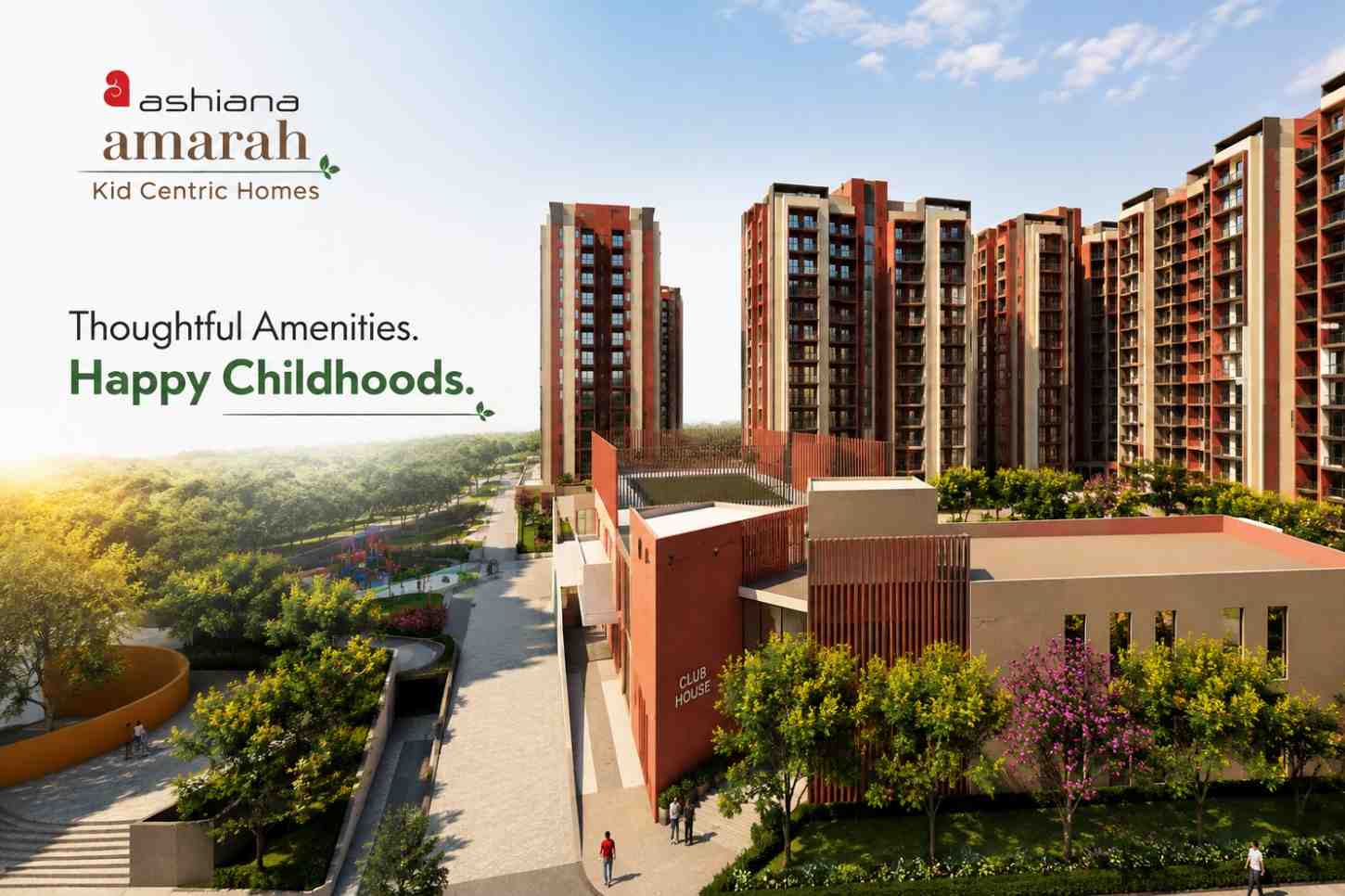
For today’s parents, choosing a home is no longer only about bedrooms, location, or the size of a living room. Families are increasingly asking whether their home can also support their child’s growth, independence, creativity, and everyday happiness. This changing perspective has contributed to the growing interest in kid-centric homes. Ashiana Amarah Sector 93 Gurgaon, a kid-centric residential community in Sector 93, Gurgaon, is one example of this approach, offering dedicated learning spaces, play areas, sports facilities, and green spaces designed around children’s needs.
But what exactly makes a home kid-centric, and why are more families considering this concept?
What Are Kid-Centric Homes?
A kid-centric home is more than an apartment with a children’s play area.
It is a residential environment planned around the physical, intellectual, emotional, and social development of children. The idea is to create spaces where children can learn, play, interact, explore hobbies, participate in sports, and gradually develop independence.
In a conventional residential project, amenities are often planned primarily from an adult’s perspective. A kid-centric community reverses that thinking by asking an additional question:
What does a child need from the place they call home?
This can influence everything from landscaping and play areas to learning facilities, sports infrastructure, safety, and community programming.
Ashiana describes its Kid Centric Homes as communities designed to support children’s holistic development through safe spaces, structured activities, learning hubs, sports facilities, and mentorship.
Why Are Families Looking for Kid-Centric Homes?
The way families live has changed significantly.
Urban parents often manage demanding work schedules, school commitments, extracurricular activities, commuting, and household responsibilities. At the same time, children may spend substantial portions of their free time indoors or on digital devices.
This creates a practical challenge: how can parents provide opportunities for physical activity, creativity, social interaction, and learning without adding another long list of daily commutes?
Kid-centric communities attempt to address this by bringing many of these experiences closer to home.
Convenience for Busy Parents
A child may have school in the morning, sports practice in the evening, music classes on another day, and homework or reading after that.
When these activities are located within or close to the residential community, families can potentially reduce travel time and simplify daily schedules.
Ashiana’s Kid Centric Homes, for example, incorporate learning spaces and sports facilities within the residential environment, while its Live & Learn programme provides structured activities for children.
For working parents, this convenience can be a meaningful consideration when choosing a family home.
A Home Can Become an Extension of Learning
Children don’t stop learning when they leave school.
They learn while playing with friends, reading a book, participating in a sport, creating artwork, gardening, solving puzzles, and interacting with different people.
This is one reason learning hubs have become an important feature of kid-centric communities.
Learning Beyond the Classroom
A dedicated learning space can encourage children to explore interests outside their regular school curriculum.
Ashiana’s Learning Hub concept includes activities and spaces related to reading, creative exploration, STEM activities, puzzles, and interactive sessions. The company also describes a Learning Hub Coordinator who helps curate activities according to children’s interests and learning pace.
The broader idea is simple: education doesn’t have to be restricted to a classroom.
A well-designed residential environment can create additional opportunities for curiosity and discovery.
The Importance of Outdoor Play
One of the biggest attractions of kid-centric homes is the emphasis on outdoor activity.
Children need opportunities to run, cycle, climb, play sports, interact with peers, and simply spend time outside. These experiences can contribute to physical fitness while also encouraging social interaction and problem-solving.
Moving Beyond the Traditional Playground
A children’s play area is useful, but kid-centric communities can go further by creating different types of spaces for different ages and interests.
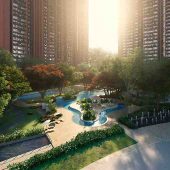
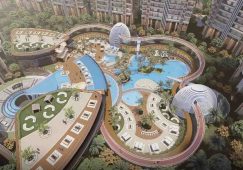
For example, Ashiana Amarah in Sector 93 includes interconnected green spaces, a Play Street concept, adventure-oriented play areas, and sports facilities. Its project information highlights features such as hopscotch, treehouses, mazes and a dry fountain within its play-oriented environment.
Such spaces can make outdoor play a more natural part of everyday life.
Why Green Spaces Matter for Children
Another reason families are showing interest in child-friendly residential environments is the availability of open and landscaped spaces.
In dense urban areas, children may have limited access to safe outdoor environments. A residential community with interconnected parks and landscaped areas can give them more opportunities to spend time outdoors.
Ashiana Amarah is spread across approximately 22 acres, with around 6.7 acres of green spaces, according to Ashiana Housing’s project information.
For children, these spaces can be used for informal play, walking, cycling, exploration, and socialising.
For parents, they can create a stronger connection between home and outdoor activity.
Sports Can Become Part of Everyday Life
Sports are not only about competition.
Regular physical activity can help children develop coordination, discipline, teamwork, and confidence. Having sports facilities within a residential community can make it easier for children to participate regularly.
More Choices for Growing Children
Children don’t always know which sport they will enjoy until they try it.
A kid-centric community can expose them to different activities and allow them to discover their interests.
Ashiana’s current Kid Centric Homes framework highlights international-standard sports facilities and partnerships with academies and coaches. Its broader programme has included activities such as swimming, tennis, badminton, cricket, skating, gymnastics, boxing and other structured activities.
This variety can be particularly valuable during the years when children are discovering their interests and abilities.
Kid-Centric Homes Can Encourage Social Development
Child development isn’t only about academics and physical fitness.
Children also learn how to communicate, cooperate, negotiate, share, solve disagreements, and build friendships.
A residential community naturally creates opportunities for children to interact with peers.
From Neighbours to Playmates
When children have safe and accessible common spaces, they can meet other children from the community without parents having to organise every interaction.
Over time, these everyday encounters can help create friendships and a stronger sense of community.
This is one of the less obvious benefits of kid-centric living: the neighbourhood itself can become part of a child’s social environment.
Safety Becomes an Important Consideration
For parents, children’s independence must be balanced with safety.
A kid-centric community therefore needs more than attractive play areas. Parents also look at factors such as gated access, supervision, traffic movement, visibility, age-appropriate play zones, and the overall design of common spaces.
The objective is not to remove every element of risk from childhood. Rather, it is to provide an environment where children can gradually develop independence within an appropriately managed community.
Ashiana describes its Kid Centric Homes as gated communities with child-friendly spaces and structured activities designed around children’s development.
Creativity Is Becoming a Bigger Part of Residential Living
Academic performance is important, but children have different interests and strengths.
One child may enjoy mathematics. Another may prefer football. Someone else may spend hours drawing, dancing, reading, making things, or experimenting with technology.
A kid-centric environment can give children opportunities to discover these interests.
Art, Music, Dance and Reading
Ashiana Amarah’s Learning Hub is designed around activities including art, craft, music, dance, and reading, giving children spaces to explore creative interests within the community.
These facilities represent a broader shift in how families think about residential amenities.
Instead of asking only whether a project has a gym or swimming pool, parents may increasingly ask:
Does this community provide meaningful experiences for my child?
Kid-Centric Homes Can Help Reduce Screen Dependence
Screen time is an increasingly important concern for many parents.
Simply telling children to put their phones or tablets away may not be enough. Children also need attractive alternatives.
Outdoor play, sports, creative activities, reading spaces, social events, and hobby programmes can provide those alternatives.
This is why the “less screen, more green” idea has become closely associated with Ashiana’s Kid Centric Homes philosophy. The company’s approach focuses on creating opportunities for children to spend time learning, playing and participating in activities within the community.
The principle is not that screens are inherently bad. Instead, the goal is to create a healthier balance between digital entertainment and real-world experiences.
What Should Parents Look for in a Kid-Centric Home?
Not every project that has a children’s play area is necessarily kid-centric.
Parents evaluating a property should look at the overall ecosystem.
A Useful Checklist
Consider whether the community provides:
- Safe and accessible outdoor play areas
- Age-appropriate activity zones
- Green and open spaces
- Sports facilities
- Learning or reading spaces
- Creative activity areas
- Structured children’s programmes
- Opportunities for social interaction
- Good security and community management
- Convenient access to schools and essential services
The quality of these facilities also matters. A long amenities list looks impressive on a brochure, but parents should consider whether the spaces are practical, accessible, maintained, and actually designed around children’s needs.
Why This Trend Could Continue
The popularity of kid-centric homes reflects a broader change in family priorities.
Parents increasingly want their homes to support not just comfort but also health, learning, recreation, social development, and quality family time.
Residential developers are responding by creating communities that provide more experiences within the development itself.
Ashiana’s recent reporting illustrates the scale of this approach: its Kid Centric Homes engaged 1,360 children in FY 2024–25, with 436 curated programmes and more than 11,000 event-specific participations across its communities.
This suggests that kid-centric living is moving beyond a marketing concept and toward a more structured residential model.
Is a Kid-Centric Home Right for Your Family?
A kid-centric home may be particularly relevant for families with young or school-going children who value outdoor activity, sports, creative learning, community interaction, and convenience.
However, parents should still evaluate the fundamentals of any property — including location, connectivity, home layout, construction quality, developer track record, maintenance, pricing, and applicable project approvals.
Kid-centric amenities should complement these fundamentals rather than replace them.
Final Thoughts
The growing interest in kid-centric homes reflects a simple change in perspective: parents are beginning to evaluate a home not only from their own point of view but also through the eyes of their children.
A good family home should provide a comfortable place to live. A thoughtfully designed kid-centric community aims to provide something more — a place where children can play, learn, build friendships, discover interests and gradually become more independent.
Projects such as Ashiana Amarah in Sector 93, Gurgaon demonstrate how residential planning can incorporate learning hubs, green spaces, sports facilities, play areas and structured children’s activities into everyday community living.
As urban families look for more balanced lifestyles, the idea of a home may increasingly be defined not just by its walls and interiors, but by the experiences and opportunities it creates for the people growing up inside it.
voters
Report Story Related Stories








Recent Stories