 Sendr 365
13 hours ago in Business Services, Marketing & Advertising
High Authority Social Bookmarking Site for Indian SEO in 2026 - A2Bookmarks India
A2Bookmarks India stands as the nation's premier social bookmarking site, expertly crafted for Indian users and businesses to enhance their digital visibility. Our social bookmarking site for India allows you to seamlessly save, organize, and promote essential web content while engaging with India's rapidly expanding online community. As one of the most effective Indian social bookmarking sites for 2026, our advanced SEO-optimized features help significantly boost website traffic and strengthen search engine presence across diverse markets. Join our thriving network among India's top social bookmarking sites to discover curated content, connect with industry professionals, and accelerate your digital growth. Start maximizing your online impact today with our tailored platform among the best social bookmarking sites for the Indian market designed specifically for the Indian digital landscape.
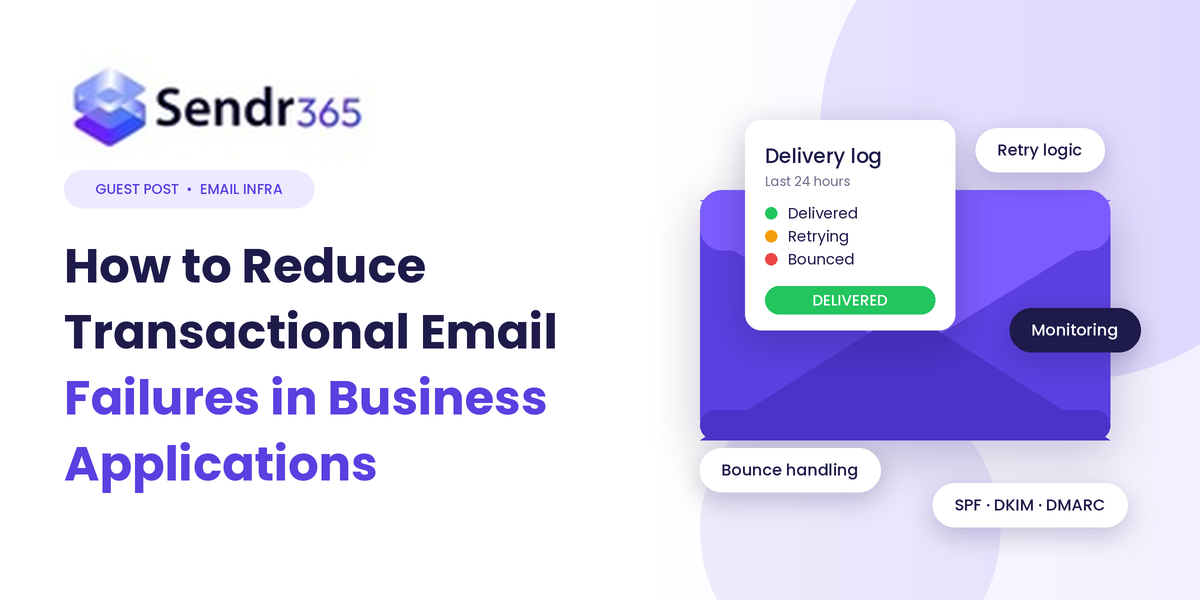
How to Reduce Transactional Email Failures in Business Applications sendr365.com
Sendr 365
13 hours ago in Business Services, Marketing & Advertising
Business applications depend on email to communicate important information to users. From account verification and password reset links to payment confirmations and order updates, transactional emails support many everyday activities. When these emails fail to reach their recipients, users may experience delays, lose access to important services, or become uncertain about the status of their transactions.
For businesses, repeated email failures can also increase customer support requests and affect the overall user experience. This is why choosing reliable Transactional Email Services and following the right email management practices are important for every application. Reducing transactional email failures requires more than simply sending an email through an SMTP server. Businesses need proper integration, domain authentication, error handling, sending controls, and regular monitoring. This article explains the common reasons behind transactional email failures and the practical steps businesses can take to reduce them.
What Are Transactional Emails in Business Applications?
Transactional emails are automated messages sent after a user performs a specific action or when an important event takes place in an application. Unlike promotional emails, these messages usually contain information directly related to an account, order, payment, or service.
For example, an e-commerce application may send an order confirmation after a customer completes a purchase. A SaaS platform may send an account verification email when someone registers. Similarly, a financial application may send payment receipts or security notifications. Common examples include:
- Account registration and verification emails
- Password reset links and security alerts
- Order confirmations and shipping updates
- Payment receipts and failed payment notifications
- Subscription renewal and cancellation messages
- Application status updates
Since users often depend on these messages to complete important actions, businesses should make sure their email systems are properly configured and monitored.
Why Do Transactional Email Failures Happen?
Email failures can occur for several technical and operational reasons. Identifying the cause is the first step towards building a more reliable email communication system.
1. Incorrect SMTP Configuration
SMTP is a common method for sending emails from business applications. However, incorrect server settings can prevent an application from connecting to the email service. Common configuration problems include an incorrect SMTP hostname, port, username, password, or encryption method. For example, an application may fail to send messages if it uses the wrong port or does not establish the required secure connection. Businesses should carefully follow their email provider’s SMTP documentation and verify the configuration before sending messages in a live environment.
2. Missing Email Authentication Records
Email authentication helps receiving mail servers verify that messages are coming from authorized sources. Incorrect or missing DNS records can create authentication problems and affect how receiving providers handle emails.
Three important authentication standards are SPF, DKIM, and DMARC.
SPF identifies the servers authorized to send emails on behalf of a domain. DKIM adds a digital signature that helps receiving servers verify message authenticity. DMARC allows domain owners to define how receiving servers should handle messages that fail authentication checks. Businesses should configure these records correctly and review them whenever their email infrastructure changes.
3. Invalid or Unavailable Recipient Addresses
Emails may fail when an application tries to send messages to invalid, inactive, or incorrectly entered addresses. Repeated attempts to send messages to unavailable recipients can also create unnecessary processing and affect sender reputation. Applications should validate email addresses during registration and account updates. Businesses should also monitor delivery responses and maintain suppression lists so that addresses associated with repeated delivery problems are handled appropriately.
4. Sending Rate Limits and Server Restrictions
Email providers may apply sending limits to protect their infrastructure and maintain service stability. If an application sends too many messages within a short period, some requests may be delayed or rejected. This can become a problem for applications that experience sudden increases in registrations, purchases, password reset requests, or other user activity. Businesses should understand their provider’s sending limits and use appropriate sending controls. Managing email volume and spreading large sending workloads over time can help reduce avoidable failures.
5. Application-Level Errors
Sometimes, the problem does not come from the email provider. It may originate inside the application itself.
For example, an application may trigger an email before a payment has been confirmed, pass incomplete recipient information, or fail to process an API response correctly. These issues can cause missing, duplicate, or incorrectly triggered messages. Developers should review the application’s email-triggering logic and test important workflows before releasing changes.
How Can Businesses Reduce Transactional Email Failures?
Businesses can improve email reliability by combining correct technical configuration with consistent monitoring and application-level controls.
1. Choose Reliable Transactional Email Services
The email service plays an important role in how applications send and manage automated messages. Businesses should select a provider that supports their technical requirements and offers suitable sending options. Look for services that provide SMTP relay, email API integration, clear technical documentation, domain authentication guidance, and access to sending metrics. The right solution should also fit the application’s expected email volume and development environment. Before choosing a provider, test its integration process and review how it handles rejected requests and other sending errors.
2. Use SMTP Relay or an Email API Correctly
SMTP relay and email APIs are two common ways to connect an application with an email delivery platform. SMTP relay allows an application to send messages through a configured mail server. It can be suitable for applications that already support SMTP-based sending. An email API allows developers to send messages through application requests. It can be useful when developers want to integrate email functionality directly into their software. Businesses should choose the method that fits their application architecture. In either case, credentials should be stored securely, connections should use the required security settings, and error responses should be handled properly.
3. Configure SPF, DKIM, and DMARC
Domain authentication should be completed before an application starts sending important transactional messages at scale. Businesses should publish the correct SPF and DKIM records provided by their email service and configure a suitable DMARC policy. They should also check DNS records after making changes to their sending infrastructure. Authentication records should be reviewed periodically to identify configuration problems and ensure that authorized sending sources remain accurate.
4. Add Proper Error Handling
An application should not assume that an email has been successfully accepted just because it submitted a request. Developers should check the response returned by the SMTP server or email API. If a request fails, the application should record the error and determine whether another attempt is appropriate. Temporary issues, such as connection timeouts or temporary server errors, may be suitable for a controlled retry. Permanent errors, such as invalid recipient addresses, generally require a different response. Retry logic should include reasonable limits and delays. Sending repeated requests without controls can create duplicate messages or increase the load on the email system.
5. Monitor Email Sending Activity
Regular monitoring helps businesses identify problems before they affect a large number of users. Useful email metrics include the number of messages sent, accepted requests, rejected messages, bounces, and other available delivery indicators. Developers should also review application logs to understand whether failures originate from the application, network connection, or email service. Monitoring is especially important after software updates, DNS changes, or modifications to email configuration.
6. Maintain Clean Contact and Suppression Lists
Applications should avoid repeatedly sending messages to addresses that have been identified as invalid or unsuitable for further sending. A suppression list helps prevent messages from being sent to certain addresses based on defined conditions. Businesses should keep these records updated and ensure that their application checks them before initiating an email request. This practice can reduce unnecessary sending attempts and support better email list management.
7. Test Important Email Workflows
Testing should cover the complete process, from the event that triggers an email to the response received from the email service.
For example, developers should test whether a password reset message is triggered after a valid request, whether a payment receipt is sent after a confirmed payment, and whether an account verification email contains the correct link. Testing should also cover failure scenarios, such as invalid recipient addresses, unavailable connections, missing configuration values, and rejected API requests.
How Sendr365 Can Support Business Email Communication
Businesses looking for an email delivery platform can consider Sendr365 for application and business email communication.
Sendr365 offers SMTP relay and REST API options that help developers connect email-sending functionality to their applications. Its developer documentation includes integration guidance and examples for technologies such as Node.js, Python, and cURL. Businesses can use the available sending options to support transactional email workflows, while contact management, suppression filtering, and email metrics help manage email activity. As with any email platform, businesses should review the available documentation, configure their sending domain correctly, and test their application workflows before using the integration in production.
Best Practices for Maintaining Reliable Transactional Email Systems
Reducing email failures is an ongoing process. Businesses should follow a consistent approach to maintain their email infrastructure as applications grow. Keep SMTP credentials and API keys secure, and avoid placing them directly in publicly accessible source code. Use secure connections and follow the provider’s authentication requirements. Keep application logs for important email events so developers can investigate problems when they occur. Review sending limits before launching large campaigns or introducing new automated workflows. It is also important to keep email templates clear and accurate. Messages should contain the information users need without unnecessary content. Links should be tested, and sensitive information should not be exposed in email content.
Finally, review email performance regularly. Changes in application traffic, recipient data, DNS configuration, or provider settings can affect the way messages are processed.
Conclusion
Transactional email failures can interrupt important business activities and create a poor experience for application users. However, many common problems can be reduced through correct SMTP or API integration, domain authentication, recipient management, error handling, and regular monitoring.
Businesses should treat email as an important part of their application infrastructure rather than an isolated feature. Choosing suitable Transactional Email Services and following reliable sending practices can help developers build more consistent email workflows as their applications grow.
Frequently Asked Questions
1. What are the most common causes of transactional email failures?
Common causes include incorrect SMTP settings, missing authentication records, invalid recipient addresses, provider sending limits, API errors, and problems in application logic.
2. How can I improve transactional email delivery?
Start by configuring SPF, DKIM, and DMARC correctly. Use a suitable SMTP relay or email API, validate recipient addresses, handle sending errors, and monitor available email metrics.
3. Is SMTP or an email API better for transactional emails?
Both methods can support transactional email sending. SMTP relay is useful for applications that already support SMTP, while an email API can provide a direct integration method for developers. The better option depends on the application’s architecture and technical requirements.
4. Why is email authentication important for business applications?
SPF, DKIM, and DMARC help receiving mail servers verify that messages are authorized and properly authenticated. Correct configuration supports domain protection and helps reduce authentication-related email problems.
5. Should applications retry failed transactional emails?
Applications can retry temporary failures, such as certain connection or server errors. However, retries should be limited and use appropriate delays. Permanent failures, such as invalid recipient addresses, should not be repeatedly retried.
6. What should businesses look for in Transactional Email Services?
Businesses should review SMTP and API support, integration documentation, authentication guidance, sending controls, suppression management, and available email metrics. The service should also match the application’s sending requirements.
voters
Report Story Related Stories












Recent Stories