 GeoPITS Global
4 months ago in Technology & IT Services
GeoPITS Global
4 months ago in Technology & IT Services
High Authority Social Bookmarking Site for Indian SEO in 2026 - A2Bookmarks India
A2Bookmarks India stands as the nation's premier social bookmarking site, expertly crafted for Indian users and businesses to enhance their digital visibility. Our social bookmarking site for India allows you to seamlessly save, organize, and promote essential web content while engaging with India's rapidly expanding online community. As one of the most effective Indian social bookmarking sites for 2026, our advanced SEO-optimized features help significantly boost website traffic and strengthen search engine presence across diverse markets. Join our thriving network among India's top social bookmarking sites to discover curated content, connect with industry professionals, and accelerate your digital growth. Start maximizing your online impact today with our tailored platform among the best social bookmarking sites for the Indian market designed specifically for the Indian digital landscape.
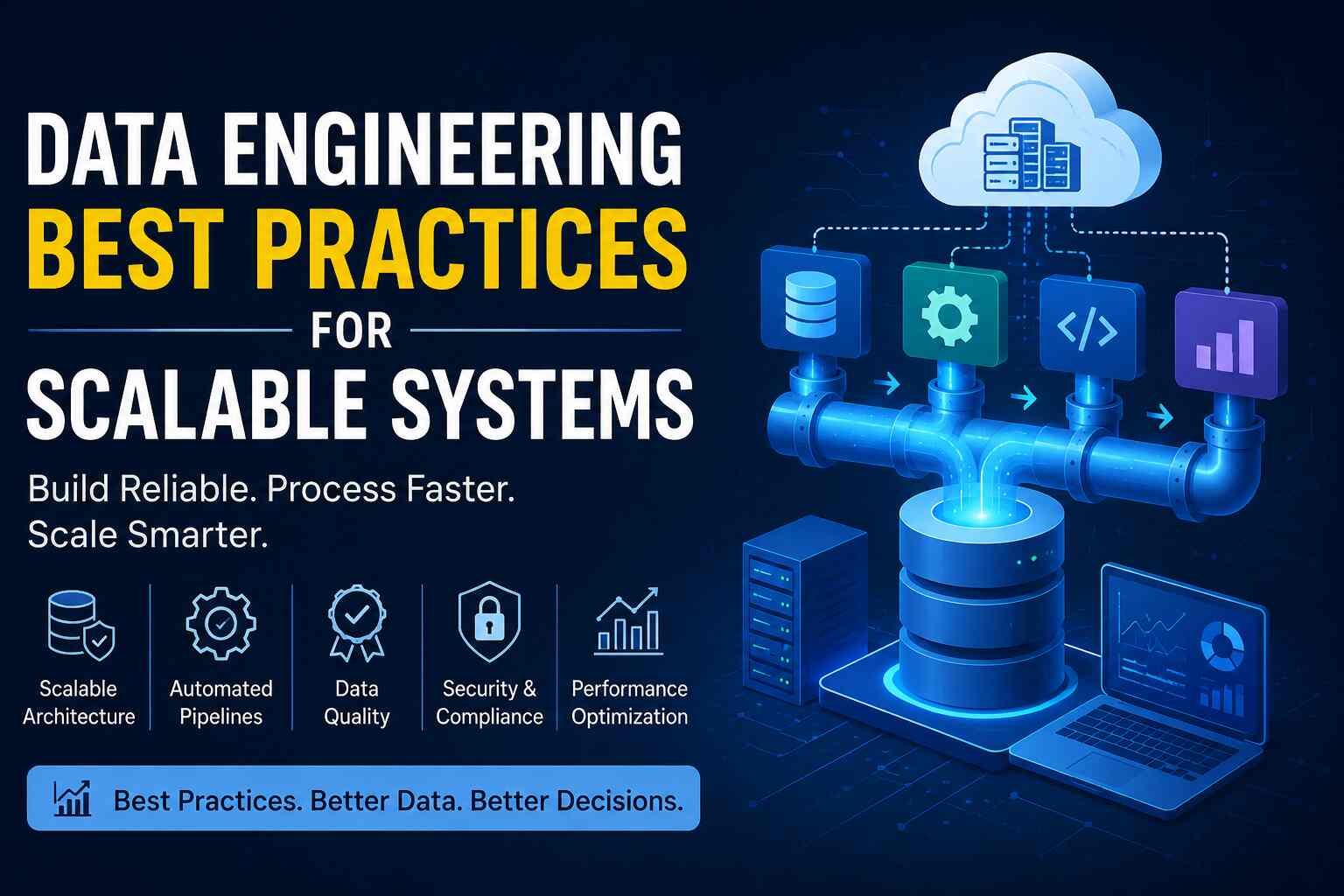
Data Engineering Best Practices for Scalable Systems geopits.com
GeoPITS Global
4 months ago in Technology & IT Services
In today’s digital world, organizations generate massive amounts of data every second. From customer interactions and business transactions to IoT devices and cloud applications, data is growing at an unprecedented rate. Businesses that want to remain competitive must build scalable systems capable of efficiently handling the increasing volume of information.
This is where effective data engineering becomes essential. Scalable data systems help organizations process, store, and analyze data without performance issues or operational disruptions. Without a strong data engineering strategy, businesses may struggle with slow processing speeds, poor data quality, system downtime, and rising infrastructure costs.
Modern enterprises are increasingly investing in advanced architectures and automation to support analytics, Artificial Intelligence (AI), and Machine Learning (ML) initiatives. By following proven best practices, organizations can create reliable and scalable data environments that support long-term business growth.
Below are the 10 most important best practices for building scalable data systems.
1. Build a Strong Data Architecture
A scalable system starts with a well-designed data architecture. Organizations should create flexible frameworks that can support future business growth and increasing workloads.
A strong architecture should include:
- Centralized data storage
- Distributed processing capabilities
- Cloud integration
- High availability systems
- Data redundancy and backup solutions
Modern businesses often use cloud-based data lakes and warehouses to manage large-scale workloads efficiently. A properly designed architecture improves system performance and simplifies future expansion.
Scalable architectures also help businesses reduce downtime and maintain consistent performance during peak usage periods.
2. Automate Data Pipelines
Manual data handling is time-consuming and prone to errors. Automated pipelines improve efficiency by streamlining data collection, transformation, and loading processes.
Organizations should implement automated ETL (Extract, Transform, Load) or ELT workflows that can process data continuously with minimal human intervention.
Benefits of automation include:
- Faster data processing
- Reduced operational costs
- Improved accuracy
- Real-time data availability
- Better workflow management
Advanced data engineering services help businesses build intelligent and automated pipelines that can scale as data volumes grow. Automation also allows teams to focus more on analytics and innovation instead of repetitive manual tasks.
3. Prioritize Data Quality Management
Poor data quality can negatively impact business intelligence, analytics, and AI initiatives. Inaccurate or incomplete datasets may lead to incorrect insights and poor decision-making.
Organizations should establish strong data quality management practices, including:
- Data validation
- Cleansing processes
- Duplicate removal
- Format standardization
- Data monitoring systems
High-quality data improves reporting accuracy and increases trust in analytics platforms. Consistent data governance also helps organizations maintain operational efficiency.
Scalable systems require clean and structured data to ensure long-term reliability and performance.
4. Adopt Cloud-Based Infrastructure
Cloud technology has become a critical component of scalable data engineering. Traditional on-premise systems often struggle to manage rapidly growing data workloads.
Cloud platforms offer several advantages, including:
- Elastic scalability
- Cost optimization
- Faster deployment
- High availability
- Disaster recovery support
Cloud-based systems allow organizations to scale resources dynamically based on business needs. This flexibility helps companies avoid unnecessary infrastructure investments while improving overall performance.
Many enterprises now use hybrid and multi-cloud strategies to improve reliability and business continuity.
5. Implement Real-Time Data Processing
Modern businesses rely on real-time insights to improve operations and customer experiences. Traditional batch processing methods are no longer sufficient for industries that require instant decision-making.
Real-time processing enables businesses to:
- Detect fraud immediately
- Monitor systems continuously
- Deliver personalized customer experiences
- Optimize operational performance
- Improve predictive analytics
Technologies such as Apache Kafka, Spark Streaming, and cloud-native streaming platforms support scalable real-time processing environments.
Organizations that implement real-time architectures gain a competitive advantage through faster and more accurate decision-making.
6. Focus on Scalability and Performance Optimization
Scalable systems must maintain performance even as workloads increase. Poorly optimized systems may experience slow queries, bottlenecks, and system failures.
Businesses should continuously monitor and optimize:
- Database performance
- Query execution
- Data storage structures
- Compute resource allocation
- Network efficiency
Partitioning large datasets, indexing databases, and using distributed processing frameworks can significantly improve performance.
Data engineering services help organizations identify system bottlenecks and implement performance optimization strategies that ensure smooth operations at scale.
7. Strengthen Data Security and Compliance
As data volumes grow, security risks also increase. Businesses must protect sensitive information from unauthorized access, breaches, and cyber threats.
Scalable systems should include strong security practices such as:
- Encryption
- Access control policies
- Multi-factor authentication
- Continuous monitoring
- Backup and disaster recovery solutions
Organizations must also comply with industry regulations and data privacy laws. Proper governance frameworks ensure that data remains secure and compliant across all systems.
Security should be integrated into every stage of the data engineering lifecycle.
8. Use Metadata and Data Cataloging
As organizations collect more data, managing and locating information becomes increasingly difficult. Metadata management and data cataloging improve data visibility and accessibility.
A centralized data catalog helps teams:
- Discover datasets quickly
- Understand data lineage
- Improve collaboration
- Reduce duplication
- Enhance governance practices
Metadata also helps organizations maintain consistency across multiple systems and platforms.
Effective cataloging improves productivity and allows data teams to work more efficiently in complex environments.
9. Monitor Systems Continuously
Continuous monitoring is essential for maintaining system health and reliability. Scalable systems require proactive monitoring to detect issues before they impact business operations.
Monitoring tools can track:
- System performance
- Resource usage
- Data pipeline failures
- Network activity
- Storage capacity
Automated alerts help IT teams respond quickly to performance issues or security threats.
Organizations that implement continuous monitoring can minimize downtime and maintain consistent system availability.
10. Enable Collaboration Between Teams
Successful data engineering requires collaboration between multiple departments, including data engineers, analysts, developers, and business stakeholders.
Organizations should encourage:
- Shared documentation
- Cross-functional communication
- Standardized workflows
- Collaborative planning
- Agile development practices
Strong collaboration improves project efficiency and ensures that business goals align with technical implementations.
When teams work together effectively, organizations can build scalable systems that support innovation and long-term growth.
The Growing Importance of Data Engineering
As businesses continue to adopt AI, Machine Learning, and advanced analytics, the demand for scalable data systems is rapidly increasing. Organizations need reliable infrastructures capable of handling massive data workloads while maintaining speed, security, and accuracy.
Modern enterprises are investing heavily in cloud technologies, automation, and intelligent data architectures to remain competitive in a data-driven economy.
Data engineering services play a critical role in helping businesses modernize their systems, optimize performance, and manage growing data complexity. From real-time analytics to cloud migration and pipeline automation, scalable data engineering has become a foundation for digital transformation.
Companies that follow best practices in data engineering are better positioned to improve operational efficiency, reduce costs, and unlock valuable business insights.
Conclusion
Building scalable data systems requires more than just advanced technology. Organizations must adopt strategic best practices that improve data quality, automation, performance, security, and collaboration. A well-designed data engineering framework helps businesses manage growing workloads efficiently while supporting analytics and AI initiatives.
By implementing these best practices, enterprises can create reliable, flexible, and future-ready systems capable of adapting to changing business demands.
With expertise in modern database management, cloud integration, analytics, and enterprise infrastructure solutions, GeoPITS helps organizations build scalable and high-performance data environments that drive long-term business success.
voters
Report Story 
Related Stories












Recent Stories