 Mrida Mrida
22 hours ago in Marketing & Advertising
Mrida Mrida
22 hours ago in Marketing & Advertising
High Authority Social Bookmarking Site for Indian SEO in 2026 - A2Bookmarks India
A2Bookmarks India stands as the nation's premier social bookmarking site, expertly crafted for Indian users and businesses to enhance their digital visibility. Our social bookmarking site for India allows you to seamlessly save, organize, and promote essential web content while engaging with India's rapidly expanding online community. As one of the most effective Indian social bookmarking sites for 2026, our advanced SEO-optimized features help significantly boost website traffic and strengthen search engine presence across diverse markets. Join our thriving network among India's top social bookmarking sites to discover curated content, connect with industry professionals, and accelerate your digital growth. Start maximizing your online impact today with our tailored platform among the best social bookmarking sites for the Indian market designed specifically for the Indian digital landscape.
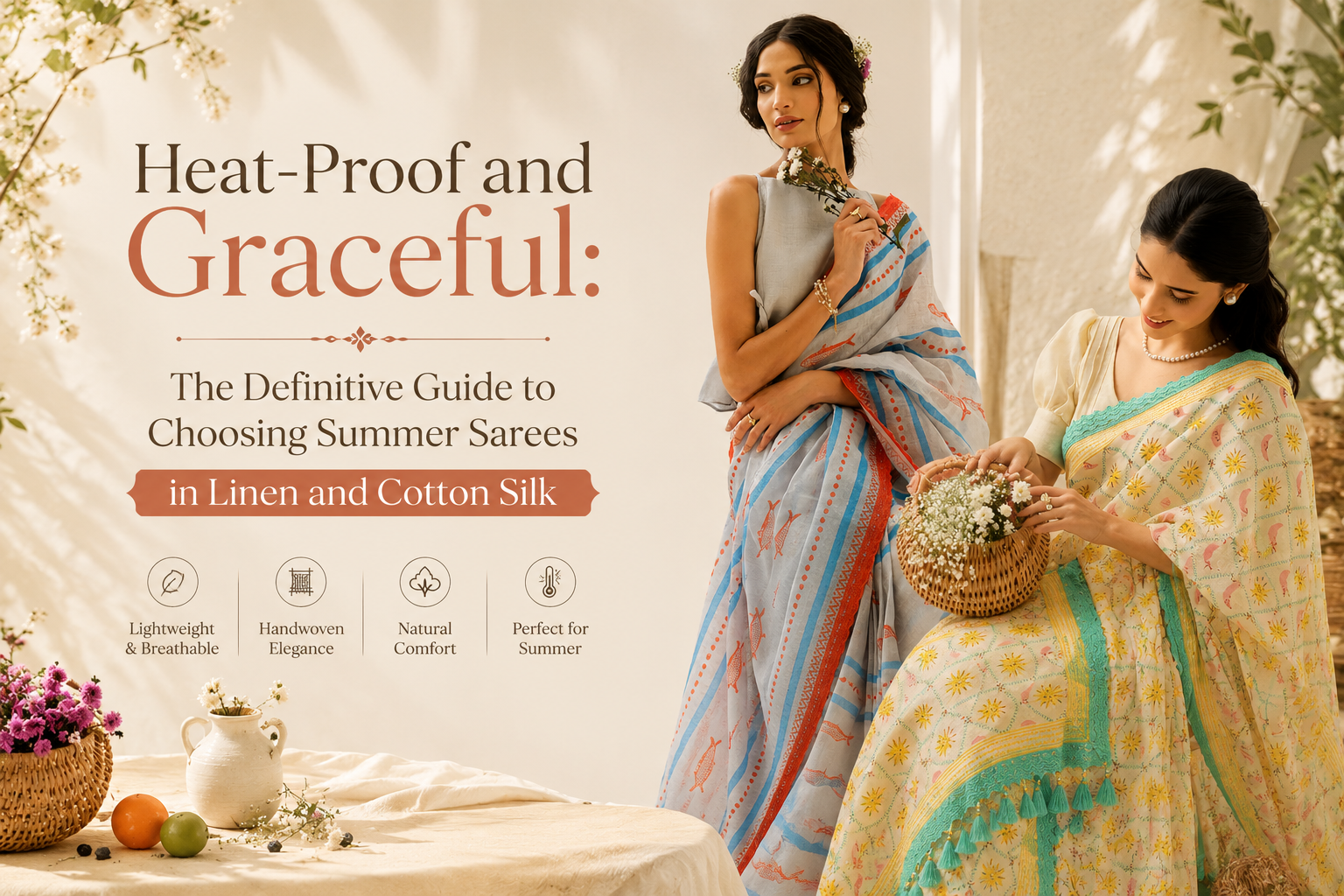
Adorned Smarter This Season: The Definitive Guide to Summer Sarees in Linen and Cotton Silk mrida.co
Mrida Mrida
22 hours ago in Marketing & Advertising
Summer dressing in India is not about choosing between comfort and elegance. It is about knowing which fabrics make both possible at the same time. Summer sarees in the wrong material force you to choose. The right fabric removes that choice entirely. Linen sarees manage heat through fiber science that synthetic textiles cannot approach. Cotton sarees and cotton silk sarees offer softness, seasonal reliability, and a range of occasion-readiness that keeps them at the center of every practical summer wardrobe. Whether you are building a wardrobe from scratch or refining what you already own, understanding these two fabrics is what separates sarees for summer that actually work from those that simply look like they should.
Discovering the right Summer Sarees starts with understanding what pure handloom linen and cotton silk genuinely offer beyond their surface appearance.
Why Fabric Knowledge Transforms Your Summer Sarees Experience
There is a version of summer dressing that feels like endurance. Then there is a version that feels genuinely effortless. The difference between them is almost never the occasion, the styling, or the colour choice. It is the fabric sitting against your skin for twelve or more hours of the day.
Natural plant-based fibers have a physical structure that synthetic alternatives lack. Their cellular architecture includes open channels and hollow cores that manage moisture and heat actively throughout the wearing period. These fibers absorb sweat before it becomes visible, transport it to the outer fabric surface, and release it into the air through evaporation. This evaporation removes heat from the skin. Synthetic fibers have no equivalent mechanism. They hold moisture and heat against the body until discomfort becomes unavoidable.
Breathable handloom sarees for daily wear multiply this natural fiber advantage through weave construction. When skilled artisans work on traditional handlooms, the natural variation in hand-controlled thread tension produces an open weave with consistent airflow capacity. Machine looms produce uniform, tightly packed thread placement that restricts this airflow regardless of the fiber involved. The production method shapes the summer performance of every saree as significantly as the raw material.
The Structural Reason Handloom Always Performs Better in Summer
The thread spacing in a handloom weave is not accidental. It is the direct physical result of human hands managing tension differently than mechanical precision allows. This spacing is the pathway for air movement through the fabric and for heat to escape the body surface. Handloom sarees carry this structural advantage from the moment of production through every wearing across the life of the piece.
Linen Sarees: The Season’s Most Scientifically Capable Fabric
Understanding why linen sarees excel in summer requires understanding what flax fiber does at a structural level. Each flax strand has a hollow core rather than a solid interior. This hollow space functions as a continuous moisture transport channel, absorbing sweat along its entire internal length rather than only at the fiber surface. The absorption rate is fast, the release rate is equally fast, and the evaporative cooling this creates sustains through hours of heat exposure.
Linen also has higher thermal conductivity than most natural fibers, meaning it draws warmth away from the skin surface on direct contact. This property makes linen feel noticeably cooler to the touch than cotton under equivalent temperature conditions, which is a tangible wearing advantage during the hottest parts of the day.
Beyond performance, linen develops quality over time. Repeated washing softens the fiber progressively, improving both the drape and the wearing comfort of the saree without diminishing its structural integrity. A well-made linen saree genuinely gets better with each season of regular use.
For women prioritizing lightweight sarees for hot climate environments, linen provides the most complete and honest answer available: low weight, active cooling, and lasting durability built into a single natural fiber.
Women who shop Linen Sarees from the Scoop of Summer collection will find handloom-crafted pieces where fiber performance and seasonal design are treated as equally important values.
Cotton Sarees and Cotton Silk: The Everyday Architecture of Summer Style
Cotton sarees do not need to be discovered or rediscovered. Their place in Indian summer dressing is entirely earned through performance consistency that has outlasted every textile trend that has moved through the market around them. Cotton is soft immediately, absorbs reliably, dries fast, washes without drama, and works across every type of occasion a summer schedule presents. These qualities are not glamorous, but they are precisely what a functional summer wardrobe is built on.
Cotton silk elevates this dependable foundation into more formally relevant territory. When cotton and silk are brought together through handloom weaving, the resulting cotton silk sarees carry cotton’s breathability as their base quality while the silk content contributes surface refinement and a more structured drape. The visual result reads as polished and intentional. The physical experience remains genuinely comfortable through extended wear.
This combination addresses one of the most consistent challenges working women face every summer. The need for comfortable sarees for office in summer is practical and daily, and cotton silk meets it without asking for compromises. It presents formally, holds its shape through a full working day, and stays physically comfortable in ways that pure silk and heavier formal fabrics cannot sustain in warm conditions.
The handwoven Cotton Sarees collection offers a carefully curated range for women who want both craft and practicality in the same piece. Each of the cotton silk sarees reflects weaving decisions made with daily summer wearability as the primary design standard.
Handloom vs Power Loom Sarees
For summer sarees buyers, this comparison is arguably more consequential than any other purchasing decision.
What Each Production Method Creates
Handloom sarees are woven entirely by skilled artisans on traditional looms where human hands control every thread placement and tension choice. The natural variation in this process produces an open weave with genuine breathing capacity and individual character. Power loom sarees are manufactured at high speed on machines optimized for uniform output, producing consistently packed thread placement with minimal natural variation and significantly reduced airflow.
Handloom Sarees
- Pros: Open weave for real summer breathability, unique artisan-crafted character in every piece, natural fiber and plant-based dye compatibility, skin-gentle finishing, supports traditional weaving communities, improves in quality and drape with regular use
- Cons: Higher price point, lower production volume compared to machine alternatives
Power Loom Sarees
- Pros: Lower cost, widely and consistently available across all market segments
- Cons: Tight machine weave substantially reduces breathability, uniform and impersonal character, shorter useful lifespan under regular wear
The Summer Performance Gap Between the Two
Handloom Sarees are the correct choice for summer sarees because their production method creates the structural quality summer requires: open weave for airflow. Beyond breathability, handloom production typically involves plant-derived dyes and minimal chemical finishing, which reduces skin irritation during months when heat increases the body’s sensitivity to external chemical contact. The performance advantage of handloom over power loom in summer is structural, measurable, and felt across every hour of daily wear.
How to Choose Summer Sarees That Serve Your Actual Life
- Office and professional use: Breathable handloom sarees for daily wear in cotton silk hold formal presentation and physical comfort through demanding working schedules without compromise.
- Outdoor events and travel: Linen handles direct sun, sustained movement, and variable summer conditions better than any other fabric in the category.
- Relaxed personal occasions: Simple cotton sarees in natural or seasonal colour palettes provide the most effortless summer comfort available.
- Festive and celebratory settings: Cotton silk with a woven border or surface motif achieves appropriate occasion elegance without the heat burden associated with heavier traditional weaves.
Frequently Asked Questions About Summer Sarees
Q: What are the best sarees for summer weather in terms of daily comfort?
A: The best sarees for summer weather for daily comfort are made from natural plant-based fibers woven on traditional handlooms. Linen sarees lead the category for high-heat performance because of their hollow fiber structure and active moisture cycling. Cotton silk sarees offer consistent breathability with a more formal finish, making them outstanding summer sarees across professional and casual daily use.
Q: Can summer sarees look formal enough for office environments?
A: Yes. Summer sarees in handwoven cotton silk are among the best formal options available for warm months. They present with professional structure and visual refinement while remaining physically comfortable through long working hours. For comfortable sarees for office in summer, cotton silk handloom is the most dependable and consistently recommended choice.
Q: What is the practical difference between handloom and power loom summer sarees?
A: Handloom sarees have an open weave that allows genuine airflow, making them far more comfortable as summer sarees than tightly woven machine alternatives. They also use natural fibers and plant-based dyes that are gentler on skin during months when heat increases physical sensitivity to chemical contact.
Q: How do I care for linen and cotton summer sarees at home?
A: Both fabrics are among the most care-friendly in the summer sarees category. Linen sarees can be hand or machine washed on a gentle cycle and improve in softness with each wash. Cotton sarees tolerate frequent washing well. Cotton silk varieties benefit from gentle hand washing to preserve the silk content and maintain their drape quality across regular wearing.
Q: Can I find summer sarees online that guarantee handloom quality?
A: Yes. Quality summer sarees in genuine handloom linen and cotton silk are available through trusted sarees online platforms that specify fiber content, weave method, and artisan sourcing. These details are the most reliable markers of authentic handloom quality, distinguishing genuine craft from machine-made alternatives presented with handloom branding.
Q: Are cotton silk summer sarees suitable for festive and wedding occasions?
A: Yes. Cotton silk sarees with woven borders, jacquard motifs, or subtle surface detail are entirely appropriate for weddings and festive summer occasions. They offer visual elevation suitable for celebrations while avoiding the significant heat and weight of pure silk or heavy brocade summer sarees.
Q: What is the difference between linen and cotton as summer sarees fabrics?
A: Linen sarees have a hollow fiber structure that actively cools the skin and manages moisture faster than cotton. They are ideal for very hot climates and outdoor conditions. Cotton sarees are softer from the first wear and suit a broader range of occasions and climates. Both are among the best sarees for summer weather, with the optimal choice depending on your specific setting, climate conditions, and comfort preferences.
Conclusion
A summer wardrobe built on fabric understanding performs differently from one assembled on visual instinct alone. Summer sarees in handloom linen and cotton silk are the most intelligent seasonal choices available because they are built from fibers and production methods that treat comfort as the primary design standard rather than a secondary consideration.
The active thermal performance of linen sarees and the professional daily versatility of cotton silk sarees together address every scenario Indian summer presents across a full season of active, demanding, and varied daily life. Mrida has developed its handloom collections around exactly this performance philosophy, producing pieces that carry genuine artisan craft and seasonal intelligence in equal measure. Explore the full range of Summer Sarees and build a warm-weather wardrobe that works as confidently as you do through every hot month of the year.
voters
Report Story Related Stories










Recent Stories