 city xray
8 months ago in Health & Wellness
city xray
8 months ago in Health & Wellness
High Authority Social Bookmarking Site for Indian SEO in 2026 - A2Bookmarks India
A2Bookmarks India stands as the nation's premier social bookmarking site, expertly crafted for Indian users and businesses to enhance their digital visibility. Our social bookmarking site for India allows you to seamlessly save, organize, and promote essential web content while engaging with India's rapidly expanding online community. As one of the most effective Indian social bookmarking sites for 2026, our advanced SEO-optimized features help significantly boost website traffic and strengthen search engine presence across diverse markets. Join our thriving network among India's top social bookmarking sites to discover curated content, connect with industry professionals, and accelerate your digital growth. Start maximizing your online impact today with our tailored platform among the best social bookmarking sites for the Indian market designed specifically for the Indian digital landscape.
CIRI Leading the Future of Integrated Research and Diagnostics ciri.co.in
city xray
8 months ago in Health & Wellness
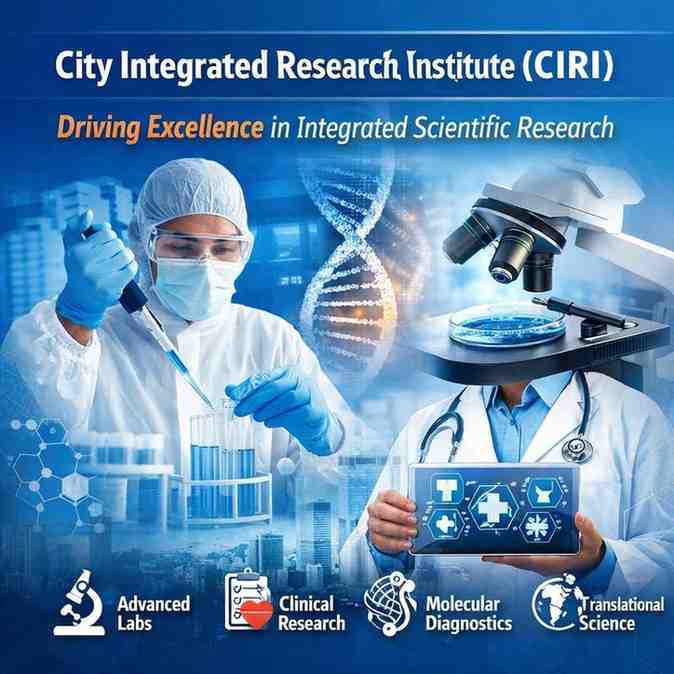
Urban healthcare systems are evolving rapidly as technology, research, and patient-centred innovation reshape the way cities approach wellness. In this dynamic transformation, the City Integrated Research Institute stands as a visionary platform connecting science, diagnostics, and community health advancement. After years of collaborative innovation and translational progress, CIRI has emerged as a leading force in integrated medical research and advanced diagnostic development.
Understanding the Vision of CIRI
CIRI is built on the belief that research should not exist in isolation. Instead, it should be deeply connected to clinical practice, diagnostic laboratories, and real-world patient needs. By combining data-driven methodologies with cutting-edge medical technologies, the institute ensures that innovation translates directly into better healthcare outcomes. At its core, CIRI bridges the gap between laboratory research and patient care. Rather than focusing solely on theoretical studies, it promotes actionable research that impacts public health policies, preventive strategies, and personalised treatment approaches. This integrated framework strengthens collaboration among clinicians, scientists, data analysts, and healthcare institutions.
Integrated Research for Modern Cities
Modern urban populations face complex health challenges — from lifestyle-related disorders to emerging infectious diseases and environmental health risks. CIRI responds to these challenges with an interdisciplinary model that brings together epidemiology, biotechnology, medical imaging, and digital health analytics. By analysing large-scale datasets, researchers at CIRI identify patterns that help predict disease outbreaks, improve early diagnosis, and enhance treatment protocols. The institute leverages artificial intelligence, machine learning tools, and precision medicine frameworks to make healthcare proactive rather than reactive. The integration of diagnostics into research allows faster validation of findings. For example, partnerships with advanced centres such as City Imaging Clinical Lab enable accurate data collection, imaging validation, and laboratory-backed clinical studies. This synergy ensures that discoveries are supported by robust diagnostic evidence.
The Role of Advanced Diagnostics
Diagnostics form the backbone of evidence-based healthcare. Without accurate testing, research outcomes remain theoretical. CIRI recognises this and prioritises the development of high-precision diagnostic tools.
From molecular diagnostics to imaging technologies, the institute invests heavily in research that enhances early detection. Early diagnosis not only reduces treatment costs but also improves survival rates and patient quality of life. By collaborating with diagnostic facilities and research labs, CIRI accelerates the journey from innovation to implementation.
Advanced imaging technologies, laboratory automation, and digital reporting systems are integrated into research projects. This enables seamless tracking of patient progress and supports longitudinal studies that contribute to sustainable healthcare solutions.
Collaboration and Multidisciplinary Expertise
One of the defining strengths of CIRI lies in its collaborative structure. The institute fosters partnerships across universities, hospitals, clinical laboratories, and public health organisations. This multidisciplinary ecosystem allows researchers to work alongside practising physicians and diagnostic specialists. Such collaboration ensures that research questions are aligned with real-world medical challenges. Instead of isolated academic inquiry, CIRI focuses on problem-solving approaches that improve diagnostic accuracy, treatment efficiency, and preventive healthcare planning. Moreover, the institute encourages cross-sector innovation by incorporating data science, bioinformatics, and health economics into research frameworks. This comprehensive model makes research not only scientifically robust but also economically sustainable.
Technology-Driven Healthcare Innovation
Digital transformation plays a central role in CIRI’s mission. By integrating electronic health records, cloud-based research databases, and AI-assisted analytics, the institute enhances transparency and efficiency in medical research. Predictive modelling tools help identify at-risk populations, while smart diagnostic systems improve test accuracy and reduce turnaround time. Automation in laboratory workflows ensures consistency and reliability in research data. Furthermore, CIRI promotes telehealth-enabled research initiatives, allowing remote patient monitoring and virtual clinical trials. This expands access to healthcare innovation, especially for underserved urban communities.
Translational Research and Patient Impact
Translational research ensures that laboratory discoveries directly benefit patients. CIRI emphasises this approach by accelerating the movement of scientific breakthroughs into clinical practice. Through structured clinical trials and pilot programs, new therapies and diagnostic tools are evaluated in real-world settings. This reduces the time required for medical innovations to reach hospitals and clinics. Patients benefit from early detection strategies, personalised treatment plans, and improved disease management frameworks. The integration of diagnostic expertise with research protocols enhances treatment precision and reduces unnecessary procedures. In addition, collaborations with diagnostic centres like City Imaging Clinical Lab strengthen data accuracy, ensuring that research findings reflect actual clinical realities.
Public Health and Preventive Strategies
Beyond individual patient care, CIRI plays a significant role in public health planning. By analysing population health trends, the institute supports policymakers in designing preventive health campaigns and screening programs. Research insights help identify high-risk communities, environmental health hazards, and emerging disease patterns. Preventive interventions based on data-driven evidence can significantly reduce healthcare burdens in densely populated cities. CIRI also promotes awareness initiatives and health education campaigns, empowering individuals to make informed healthcare decisions. Prevention remains one of the most cost-effective and impactful healthcare strategies, and the institute prioritises it in all its initiatives.
Sustainable Healthcare Development
Sustainability is an essential pillar of modern healthcare. CIRI integrates environmental responsibility into its research methodologies by promoting efficient laboratory processes, waste reduction strategies, and energy-conscious technologies. Long-term healthcare solutions require balancing innovation with resource management. By adopting sustainable research practices, the institute ensures that progress does not compromise environmental or economic stability. Moreover, the integration of digital systems reduces paperwork, enhances record-keeping efficiency, and supports eco-friendly operations across research and diagnostic centres.
The Future of CIRI
As healthcare continues to evolve, CIRI remains committed to expanding its impact through innovation, collaboration, and evidence-based solutions. Future initiatives include expanding genomic research, strengthening AI-assisted diagnostics, and fostering global research partnerships. The institute envisions a healthcare ecosystem where research institutions, diagnostic labs, and clinical centres operate seamlessly under an integrated framework. By continuing to build strong collaborations with partners such as City Imaging Clinical Lab, CIRI ensures that its research remains clinically relevant and technologically advanced. Emerging technologies such as precision medicine, advanced molecular testing, and predictive analytics will further strengthen its role in shaping the future of urban healthcare.
Conclusion
Healthcare transformation requires more than isolated discoveries — it demands integration, collaboration, and actionable innovation. The City Integrated Research Institute exemplifies this integrated vision by combining research excellence with diagnostic precision and community-focused healthcare advancement. Through its collaborative ecosystem, technological leadership, and commitment to translational science, CIRI continues to redefine how cities approach health research and clinical excellence.
voters
Report Story 
Related Stories











Recent Stories